
Regional Diplomacy Seeks to End Iran War as U.S. and Israeli Strikes Continue
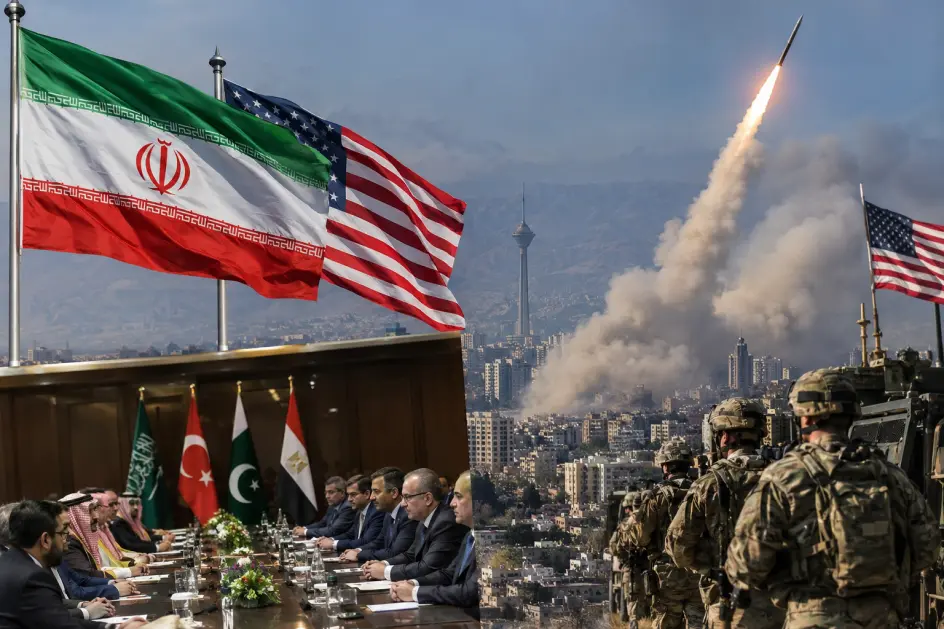
Islamabad — Foreign ministers from Saudi Arabia, Türkiye and Egypt held talks in Pakistan’s capital on Sunday in an effort to contain the escalating conflict in the Middle East and create a path toward negotiations between the United States and Iran. The diplomatic efforts came as military operations continued and Tehran launched retaliatory missile and drone attacks across the region.
Pakistan confirmed the participation of the three countries’ foreign ministers in the Islamabad meetings. Prime Minister Shehbaz Sharif also said he had held extensive discussions with Iranian President Masoud Pezeshkian about the ongoing regional hostilities.
More Than 3,000 Killed Since the War Began
The diplomatic initiative comes nearly a month after the war erupted with U.S. and Israeli strikes on Iran, prompting Tehran to launch attacks against Israel and several Gulf Arab states.
According to the original report, more than 3,000 people have been killed since the conflict began, while the fighting has spread across the region and raised fears of a wider confrontation.
Despite the latest diplomatic efforts, there has been little indication of meaningful progress toward a ceasefire, with military strikes continuing and tensions remaining high.
Tehran Questions Washington’s Diplomatic Intentions
Neither the United States nor Israel participated in the Islamabad talks. Meanwhile, Iranian Parliament Speaker Mohammad Bagher Ghalibaf questioned Washington’s intentions, suggesting that its diplomatic overtures could serve as cover for preparations for a ground offensive.
His remarks came as the United States deployed additional military personnel to the Middle East.
Ghalibaf warned against any ground invasion of Iran and threatened a forceful response against U.S. troops and Washington’s regional allies, according to Iranian state media.
At the same time, Israel announced new waves of incoming Iranian attacks, while explosions were reported across Tehran, according to the report.
Regional Powers Push for Direct U.S.-Iran Dialogue
Egyptian Foreign Minister Badr Abdelatty, Turkish Foreign Minister Hakan Fidan and Saudi Foreign Minister Prince Faisal bin Farhan took part in the meetings in Islamabad.
Abdelatty said the discussions were intended to create conditions for direct dialogue between Washington and Tehran, which have relied largely on intermediaries to communicate since the war began.
The diplomatic initiative follows a U.S. proposal containing 15 points, reportedly intended to serve as a framework for a possible peace agreement.
However, Iranian officials have publicly rejected the American proposal and expressed opposition to negotiating under military pressure.
Iran Allows Additional Ships Through the Strait of Hormuz
In a related development, Iran agreed to allow 20 additional Pakistani-flagged vessels to pass through the Strait of Hormuz, according to Pakistani officials cited in the report.
The decision represents a limited easing of restrictions on commercial shipping through the strategic waterway, which is crucial to global oil and energy supplies.
Nevertheless, uncertainty surrounding maritime traffic continues to threaten international trade and energy markets.
U.S. Military Reinforcements Raise Fears of Further Escalation
While diplomatic efforts continue, the United States is deploying thousands of additional Marines and paratroopers to the Middle East, fuelling concerns that the conflict could enter a more dangerous phase.
Meanwhile, Yemen’s Iran-aligned Houthi movement announced its entry into the conflict, saying it had launched missiles toward what it described as sensitive Israeli military sites. The announcement marked a further expansion of the regional confrontation, according to the report.
Despite the military deployments, U.S. Secretary of State Marco Rubio said Washington could achieve its objectives without deploying ground troops inside Iran.
His comments came amid growing domestic opposition in the United States to expanding the war, particularly to the possibility of a ground invasion.
Iran Reportedly Develops Its Own Peace Proposal
Iran has also reportedly prepared a separate five-point proposal for ending the conflict.
Press TV, Iran’s English-language state broadcaster, reported last week, citing an unnamed official, that the proposed framework included an end to the killing of Iranian officials, guarantees against future attacks, compensation for damages and recognition of what Tehran describes as its sovereignty over the Strait of Hormuz.
The details of the proposal have not been independently confirmed in the report, and it remains unclear whether Washington would be willing to consider its terms.
Diplomatic Efforts Face Major Obstacles
The latest developments highlight the significant gap between the positions of Washington and Tehran. The United States maintains that it can achieve its military objectives without a ground invasion, while Iran continues to reject the American negotiating framework and insists that any settlement must address its security and sovereignty concerns.
With military strikes continuing, reinforcements arriving in the region and additional actors becoming involved in the conflict, diplomatic efforts face mounting challenges.
For now, the Islamabad talks represent another attempt to prevent further escalation, but no decisive breakthrough has been announced. The prospect of a ceasefire remains uncertain as both sides maintain their positions and regional tensions persist.