
Syrians file reports regarding the seizure of homes and the arbitrary eviction of owners in Damascus and its countryside.
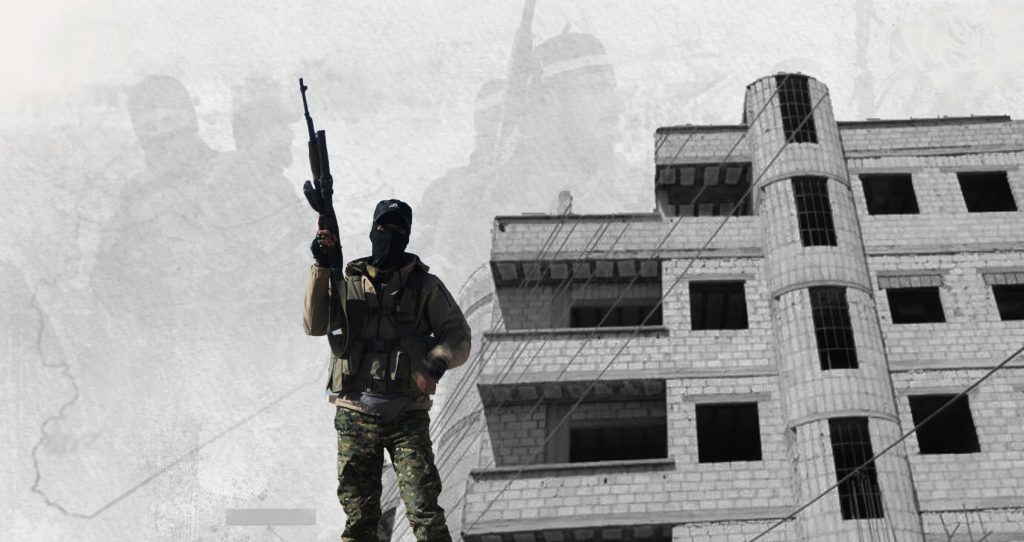
From homes in central Damascus to luxury villas in al-Malki, and from the disputed lands of Qudsaya to the devastated neighbourhoods of Jobar and Qaboun, the loss of property has become a serious concern for Syrian civilians, businesspeople, and expatriates. As the country moves toward reconstruction, a fundamental question remains: who is protecting the rights of the people whose homes and land are being taken away?
1. Civilian Homes in Central Damascus: Families Forced to Leave
In central Damascus, reports from residents describe families being forced out of their homes by armed personnel linked to Hay’at Tahrir al-Sham (HTS) and affiliated security structures. The explanation given in these cases is that the properties are needed for military or security purposes.
For families who have spent years building their lives in these homes, being ordered to leave means losing more than a roof over their heads. It means losing privacy, security, personal belongings, and the certainty that they can return to their own property.
The use of a military or security justification does not remove the need for a lawful basis, clear procedures, and protection for civilian property. A home cannot simply become available for occupation because armed personnel have decided to use it.
Where homes have been taken over, the authorities must establish the legal basis for their occupation, disclose the relevant decisions, and ensure that the original residents can challenge those decisions and recover access whenever the occupation is not legally justified.
The people affected deserve clear answers: Who ordered them to leave? Under what legal authority? How long will the occupation last? Who is responsible for their belongings and any damage to their homes? And when will they be allowed to return?
These are not minor administrative questions. They concern the fundamental right of civilians to live safely in their own homes.
2. Al-Malki: Villas and Homes Belonging to People Who Are No Longer There
The situation in al-Malki, one of Damascus’s most prominent residential districts, raises another serious concern: the fate of villas and houses belonging to people who have been killed, detained, or forced to leave Syria.
Information circulating about properties in the district points to concerns over homes coming under the control of powerful figures or people connected to the new authorities. The circumstances surrounding each property must be examined through ownership records and other available evidence, but the underlying issue is clear: the absence of an owner must never become an opportunity to take control of their home.
When a property owner is killed, the property does not automatically become ownerless. The legal rights of heirs remain relevant. When an owner is detained, detention does not itself transfer ownership. And when a family flees the country to escape danger, its home does not become the property of whoever occupies it.
The same principles apply to businesspeople whose commercial success allowed them to purchase villas, houses, shops, and land. Wealth or business activity does not remove a person’s right to legal protection. Nor should political changes create a system in which property rights depend on connections, influence, or access to armed power.
Every disputed property in al-Malki should be reviewed through a transparent process. Ownership documents must be protected, transfers examined, and any unlawful occupation addressed through the law. If property has been taken unlawfully, the rightful owners or their heirs must have a meaningful route to recover it.
3. Civilians, Businesspeople, and Expatriates: Leaving Syria Does Not Mean Giving Up a Home
Millions of Syrians have experienced displacement, migration, imprisonment of family members, or the loss of relatives during years of conflict. Many left behind houses, shops, offices, warehouses, and agricultural land.
For expatriates, the challenge is particularly difficult. They may be thousands of kilometres away, unable to visit government offices, monitor their property, or respond quickly when a dispute arises. Some families also struggle with missing documents, disputed powers of attorney, and uncertainty about the status of properties they left behind.
A property may represent decades of work and savings. A shop may have supported an entire family. A house may have been inherited through several generations. These assets cannot be treated as abandoned merely because their owners are no longer present.
Protecting property rights requires accessible land registries, reliable ownership records, transparent procedures for checking transactions, and the ability to challenge documents or transfers that may have been obtained unlawfully.
The rights of deceased owners’ heirs must also be protected. Families should be able to establish inheritance rights and seek legal remedies without intimidation or unnecessary administrative obstacles.
Displacement is not consent. Detention is not a transfer of ownership. Exile is not abandonment.
4. Qudsaya: Land, Expropriation, and the Battle for Fair Compensation
In Qudsaya, in the Damascus countryside, disputes over land and compensation have brought the relationship between property owners and development projects into focus.
In September 2026, protests and complaints concerning land associated with the Abyat Hills and Sham View projects drew attention to questions about the rights of original landowners, previous expropriation decisions, and the compensation arrangements connected to development.
Some landowners have sought clarification about the status of their properties and whether the compensation they received, or were offered, reflects their legal entitlements. The authorities have also pointed to the need to review individual records and the legal basis of each case.
The solution requires more than general assurances. Property owners need access to the relevant documents, a clear explanation of how their land was acquired, and a transparent account of how compensation was calculated.
Development projects can contribute to housing and economic recovery, but investment cannot replace due process. Where an expropriation was lawful, the applicable compensation obligations must be respected. Where a decision or transaction was unlawful, affected owners must have access to a fair legal remedy.
Land should not be incorporated into irreversible development arrangements while serious ownership questions remain unresolved.
5. Jobar and Qaboun: Reconstruction Must Protect Original Landowners
Jobar and Qaboun are among the areas of Damascus whose future is closely tied to reconstruction. Years of destruction have left residents facing damaged buildings, uncertain property records, and difficult decisions about whether and how they can return.
For many families, the land beneath a destroyed home remains their most important asset. The destruction of the building does not, by itself, erase the ownership rights associated with the land.
Proposed redevelopment arrangements have raised concerns about how land and future building shares will be divided between original owners and investors. Owners need to know what they will receive, how property values are assessed, what obligations they will assume, and whether they can reject or challenge terms they consider unfair.
Reconstruction requires financial resources and technical expertise. Yet these requirements do not justify sidelining the people whose land makes the projects possible.
A fair reconstruction process should include:
- Clear identification of original landowners and heirs.
- Transparent publication of development plans and ownership arrangements.
- Independent property valuations and understandable compensation calculations.
- Meaningful consultation with residents before decisions are finalised.
- Access to independent legal advice and a process for challenging decisions.
- Protection against the transfer or redevelopment of disputed land before essential ownership questions are resolved.
The future of Jobar and Qaboun should not be determined solely by investors or administrative authorities. The people who owned the land before the war must remain central to decisions affecting their property and their ability to return.
6. Agricultural Land and Properties Beyond Damascus
The problem extends beyond residential districts and luxury properties. Agricultural land is essential to the livelihoods of families across Syria.
In parts of northern Syria, reports of land occupation and restrictions on owners’ access to their fields have raised concerns about the security of private property. Where farmers are prevented from cultivating their land, they lose income, harvests, and the ability to support their families.
A field is not simply a financial asset. It may be the result of generations of work, and its income may sustain an entire household.
The protection of property must therefore include practical access to land, not merely the existence of a document in a registry. Authorities must address unlawful occupation, threats, and interference with legitimate ownership, while ensuring that competing claims are resolved through an impartial process.
The same principle applies to homes, shops, and commercial properties throughout Syria. No person should have to rely on personal influence or armed protection to regain access to property that legally belongs to them.
7. When Security and Investment Become Reasons to Take Property
Two justifications frequently arise in property disputes: security requirements and development needs.
Security authorities may sometimes have lawful reasons to impose temporary restrictions or use certain premises. However, such measures must have a proper legal basis and be limited by the applicable law. They must not become a mechanism for permanently depriving civilians of their homes without due process.
Similarly, reconstruction and investment may serve legitimate public purposes, but they must respect property rights and applicable compensation requirements. A development project should not turn a disputed property into an irreversible commercial asset before the rights of its original owners have been fairly examined.
The central distinction is between a measure authorised by law and a seizure carried out through power or force. The former must be subject to legal safeguards and review. The latter requires investigation and, where established, accountability and appropriate remedies.
8. What Must Be Done to Protect Syria’s Property Owners?
Restoring confidence in property rights requires concrete action.
First, investigate forced evictions. Complaints from residents of central Damascus should be examined, including the reasons given for their removal, the legal basis for the occupation, and the conditions under which they may return.
Second, review disputed properties in al-Malki. Ownership records, inheritance documents, and the circumstances surrounding changes in possession should be examined, particularly where owners have died, been detained, or left the country.
Third, protect displaced owners and expatriates. Establish accessible procedures that allow claims to be filed from abroad and prevent absence from being treated as abandonment.
Fourth, make land and reconstruction decisions transparent. Publish the legal basis of expropriations, the relevant compensation rules, and the ownership arrangements for projects in Qudsaya, Jobar, and Qaboun.
Fifth, protect property while disputes are investigated. Where legally justified, introduce safeguards against transfers, demolition, or redevelopment that could undermine a final decision on ownership.
Sixth, provide effective legal remedies. Owners and heirs should be able to challenge disputed transactions, seek the return of property where legally warranted, and pursue compensation when appropriate.
Seventh, ensure accountability. Where investigations establish unlawful occupation, coercion, document forgery, or abuse of authority, the responsible individuals should face fair legal proceedings, regardless of their position or connections.
Conclusion: Syria Cannot Rebuild Its Future by Ignoring Property Rights
The future of Syria depends not only on rebuilding roads, homes, and commercial districts, but also on restoring people’s confidence that their rights will be respected.
The concerns surrounding homes in central Damascus, villas in al-Malki, land in Qudsaya, and reconstruction in Jobar and Qaboun all point to the same fundamental issue: property rights must be protected through transparent laws and institutions rather than determined by force, influence, or a person’s ability to remain physically present.
Families who have been displaced, people whose relatives have died or been detained, business owners who have left the country, and residents seeking to return to their neighbourhoods all deserve a fair process for protecting their property.
The answer is not to condemn people without evidence or to leave serious complaints unanswered. It is to investigate, establish ownership, protect disputed assets, provide legal remedies, and hold those responsible for proven violations accountable.
A civilian’s home is not a prize of war. A villa does not become ownerless when its resident is absent. A family’s land is not an opportunity for someone else to profit from its suffering.
If Syria is to achieve a stable recovery, the protection of property rights must be part of reconstruction from the beginning—not a promise postponed until after the buildings have been completed and the land has changed hands.
Rebuilding Syria must mean restoring the rights of its people, not leaving them afraid of losing the homes and land to which they hope to return.